
British Luxury Fashion: A History of Craft, Weather and Rebellion
Share
THE COUNTRYLOOK WARDROBE / BRITISH FASHION HISTORY
British luxury did not begin with a logo. It grew from tailoring, useful cloth, weather, social rules—and the pleasure of breaking those rules. Its most interesting history is still visible in the things we wear.
I have two very different British garments in mind when I think about luxury. One is a coat that keeps rain off on a bleak afternoon; the other is a sharp jacket that changes my posture before I enter a room. The first earns its keep in weather, the second through fit and the quiet pleasure of feeling properly dressed. Neither needs a logo to make its case. That tension between use and display seems to run through the whole history of British fashion.
I began to see a pattern as I followed the houses back through their archives. A London tailor made formal evening dress less cumbersome. A Hampshire outfitter worked on cloth that would shed rain without weighing the wearer down. Scottish and island textile makers developed ways of working that tied material to landscape. Then younger designers cut into all those respectable traditions and turned them inside out. What interests me is not a single national look. It is the argument between those ideas.
I do not find a league table of famous names very useful. I want to know whether the craft sits in the pattern, the cloth, the finishing, the weather protection or the imagination of the designer. British ownership, British design and British manufacture are different claims. When I turn a coat inside out or read its care label, that distinction becomes rather less abstract. It is possible to admire a British brand without pretending every part of the garment was made here.
Savile Row: the strange modernity of a perfectly cut coat
At Savile Row I find myself looking for the little signs that contradict its solemn reputation. Nineteenth-century London tailoring certainly had rules, but some of its most consequential changes made people more comfortable within them. James Poole opened a business in 1806; the firm that became Henry Poole & Co established itself on Savile Row in 1846, making military, court and civilian dress. Behind the grand address lay a workshop's repeated problem: how to fit a moving person for a particular social life.
I love the mild absurdity of the famous 1865 commission. The Prince of Wales, later Edward VII, wanted a shorter coat for informal dinners at Sandringham, and Henry Poole's surviving records support the order. That garment became an important precedent for the modern dinner jacket. We now treat black tie as a whole ceremony, yet one of its foundations was an attempt to make dinner less formal. I like imagining the relief of moving through a room without the tails of a coat following behind. Fashion has always negotiated with comfort, even at court.
I learnt more from watching how a jacket behaves when someone sits down than from admiring any display of hand stitching. A cutter considers the slope of shoulders, posture, the hang of the front and where the waist needs to sit. The adjustments are often invisible by the time a suit is finished. That is the point. I want a garment that helps me forget it is on my body, not one that requires me to stand like a mannequin so that the cut looks correct.
When I hear the word bespoke, my next question is what pattern was used. True bespoke traditionally begins with one cut for the wearer and fittings that allow substantial correction; made-to-measure adapts a pre-existing system; ready-to-wear starts in standard sizes. A good garment can emerge from any of them. Before I am impressed by Savile Row's reputation, I want to know who is cutting, who is fitting and what can be changed once I move rather than pose.
The material has a place: wool, tweed and skills beyond London
On a map, the story of British luxury looks very different from the elegant Mayfair drawing room where it is often told. The cloth may have been prepared, spun, woven, dyed or finished hundreds of miles away. I have held a beautiful fabric that was entirely wrong for the jacket I had in mind; no amount of clever tailoring could make it behave like a different material. Mills and makers beyond London are as central to the history as the names above shop doors.
Harris Tweed is the cloth that makes me stop reading the adjectives and look for the label. Under the Harris Tweed Act 1993, genuine cloth carrying the Orb mark must be made from pure virgin wool dyed and spun in the Outer Hebrides, handwoven at islanders' homes and finished in the islands. The Harris Tweed Authority oversees the protected standard. I can love a handsome checked wool jacket made elsewhere, but I cannot call its cloth Harris Tweed simply because it looks at home beside a stone wall. Here, place is a legal and working definition.
I turn the garment label over and ask a second question. Harris Tweed tells me where the fabric came from and how it was produced; it does not tell me that the coat itself was cut and stitched in the Hebrides. I admire the work of island weavers, but that admiration is no reason to blur one stage of production into another. Fabric provenance and garment manufacture deserve separate answers. The difference matters especially when a retailer tries to compress an entire supply chain into one reassuring sentence.
I feel the same pull when I pick up a fine-gauge jumper and look at its construction. John Smedley's Lea Mills in Derbyshire dates to 1784 and still produces knitwear. That is the kind of history I can connect to a living production practice rather than a mood board. But a label does not wash a jumper for me. Fine knitwear needs sensible care; coarse jacket cloth feels and wears differently from soft suit worsted. I choose the material for the life I intend to give it, not just for its birthplace.
1856 and 1894: the British coat begins with a problem
The rain has a way of exposing the weaknesses of a beautiful coat. I think about that when I read the beginnings of Burberry and Barbour. Thomas Burberry opened in Basingstoke in 1856 and developed gabardine in 1879, with the patent following in 1888 according to the brand chronology. The goal was protection without the stiffness and weight of older weatherproofing. It is one of those innovations that looks obvious only after someone has made it work.
When I lift a trench coat, I think first about its weight and how the shoulders move, not its film appearances. Burberry's gabardine story is about ventilation, freedom and rain, even if the trench later took on military and social meanings. The current company identifies its Heritage Trench Coats as made at Castleford in Yorkshire. I take care with that phrasing: it applies to that range, not everything carrying the Burberry label. A founding town, a design studio and a manufacturing site are three separate facts, however elegantly a campaign photographs them.
A waxed jacket asks for a different relationship. John Barbour, a Scotsman, established the business in South Shields in 1894 to supply protective clothing for North Sea mariners. I can feel the difference when I handle waxed cotton: more substantial, with a characteristic surface and the expectation that it will need re-waxing. Barbour still makes certain classic designs, including the Bedale and Beaufort, at South Shields, and its repair and re-waxing work is part of the appeal. Other products use a wider supply chain. I like a coat I can bring back to life rather than throw away at the first sign of age.
I have a weakness for a coat that looks better after it has been through a few real winters. Creases, repairs and a little evidence of use can make country clothing more personal, provided the material is suited to the weather. I do not pretend waxed cotton outperforms a modern lightweight membrane in every condition; it has a distinct feel and needs maintenance. But I value a jacket that can be re-waxed and repaired instead of abandoned. For the practical details, see our guide to Barbour's waxed jackets.
TEN MOMENTS THAT CHANGED THE WARDROBE
- 1806 — James Poole's business begins, later becoming a Savile Row institution.
- 1846 — Henry Poole establishes its Savile Row premises.
- 1856 — Thomas Burberry starts in Basingstoke.
- 1865 — Poole cuts the short evening coat requested for Sandringham.
- 1879 — Burberry develops gabardine.
- 1894 — Barbour begins supplying protective clothing in South Shields.
- 1955 — Mary Quant's Bazaar opens on Chelsea's King's Road.
- 1974–76 — Westwood and McLaren's King's Road shop becomes SEX and then Seditionaries.
- 1992 — Lee Alexander McQueen founds his London house.
- 2001 — Stella McCartney launches with an animal-material policy that challenges luxury conventions.
The 1960s and 1970s: when the street stopped asking permission
The story becomes more exciting to me when people begin refusing the old rules. In 1955 Mary Quant opened Bazaar on the King's Road in Chelsea. The V&A describes the quick rhythm of its early selling: small runs, rapid production and stock renewed with proceeds from the previous day's trade. I think of young women returning to see what had appeared in the window rather than waiting for the permission of a grand fashion house. Quant was changing the pace of shopping as much as the clothes themselves.
I would love the story to be as tidy as a single designer 'inventing' the miniskirt. The museum evidence is more interesting: hems shortened across a culture, with women on the street participating in the change. Quant helped popularise the look alongside tights, colour and short dresses that made new ways of moving and dressing possible. When I picture those clothes, I see girls walking, dancing and boarding buses, not standing motionless for a designer's photograph. Fashion can be made by its wearers as well as its makers.
Then, at 430 King's Road, the rebellion became much less polite. Vivienne Westwood and Malcolm McLaren moved through several incarnations of their shop, including SEX in 1974 and Seditionaries in 1976. Looking at the surviving pieces in the V&A collection, I find myself drawn to how ordinary clothing was deliberately unsettled: chains, torn fabric, fetish references, military hardware. These were not clothes asking to be admitted to established luxury. They were questioning who had the right to decide what respectable dress should look like.
I like the contradiction that Westwood later returned again and again to the technical history of clothing: corsetry, tailoring, old fabrics and shapes. Rebellion did not require her to forget the past. She took it apart and rearranged it. I can admire a Savile Row cutter's precision and smile at the insolence of punk without choosing sides. Both depend on knowing what a garment is supposed to do before deciding whether to obey it.
Paul Smith's tiny Nottingham shop, opened in 1970, offers a quieter kind of disruption. I recognise the pleasure immediately: a familiar jacket, then a lining or detail that makes me look twice. He did not need to abandon menswear's authority to make it funny and personal. I like that as much as the louder rebellions. Not every challenge to tradition needs a safety pin.
From McQueen to modern luxury: a nation of very different designers
With Alexander McQueen, I find myself looking at structure even when the show is doing its best to shock me. The house began in London in 1992; McQueen's Savile Row training gave him the technical knowledge to distort, exaggerate and challenge familiar silhouettes. A shoulder can become armour, a waist can seem constrained or defiant. The theatrical story matters, but the garment's cut is what makes the story visible on a moving body. Without that skill, provocation would remain a sketch.
Stella McCartney asks me to think about luxury from another direction. Her house began in 2001 without animal leather, fur, skins, feathers or animal glues, and has explored alternative materials. That choice does not erase the environmental cost of clothing, but it changes what the designer must solve. I turn a non-leather bag over and want to know the actual composition and how it will age. An attractive surface is not enough; the material decision belongs at the heart of the design.
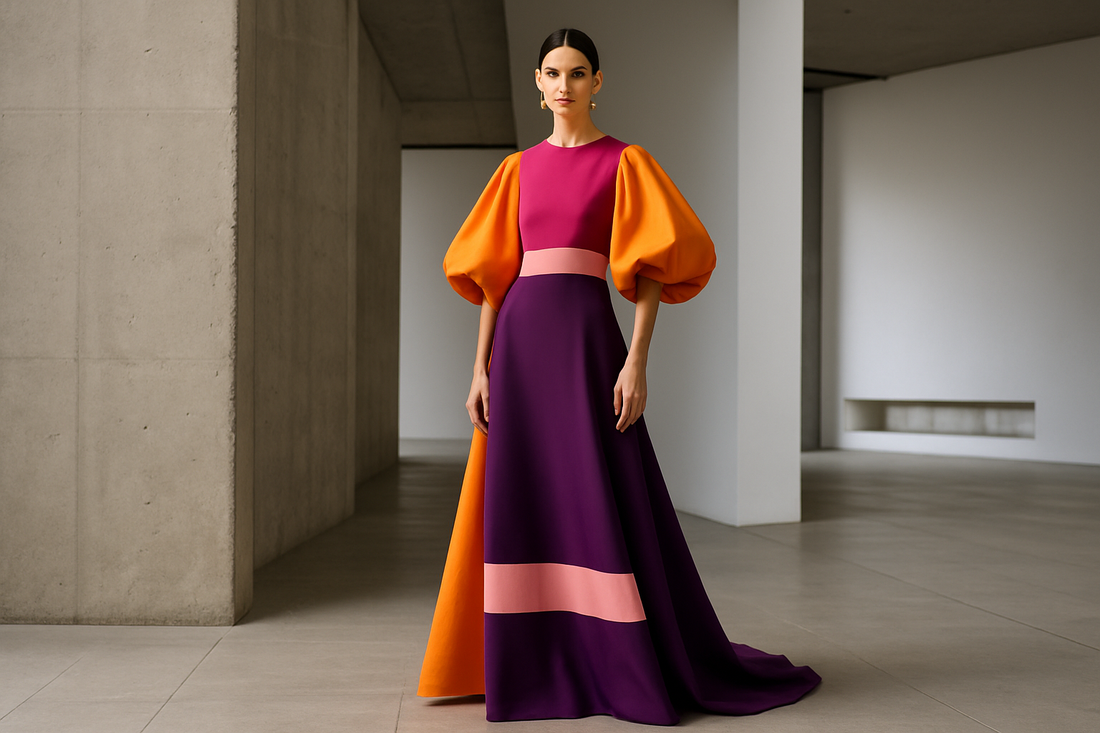
Two labels launched in London in 2005 show me how little sense a single phrase like 'British elegance' makes. Erdem Moralioglu, born in Montreal and trained in London, researches women's lives and turns them into prints, embroidery and silhouettes; his 2024 Chatsworth exhibition drew explicitly on Duchess Deborah. Roksanda Ilinčić works with architecture, volume and bold blocks of colour. I respond to them in different ways. An Erdem print invites me closer to read its detail; a Roksanda shape can establish a mood from across a room.
I am glad these designers do not agree. British fashion can be practical, romantic, architectural, mischievous, theatrical or severe, and much of its energy has come from people born elsewhere. I do not need them to settle on one national uniform. Nor do I need a British label to disguise manufacturing abroad. A more honest understanding of the industry makes the creative differences more enjoyable, not less.
For a more direct buying comparison across contemporary designers, see our guide to ten British fashion brands and what each does best. The distinction between history and choosing an actual piece is important: admiration for a designer's work need not become a purchase.
What should “luxury” mean when we come to buy?
I come back to a simple test when somebody calls a garment luxurious: what can I point to? An individual pattern cut for one body. Wool produced under a protected origin rule. A coat designed to be re-waxed. A print that keeps its interest after the scarf is folded. I do not assume any of these automatically justifies a high price, but at least they give me something concrete to investigate beyond the name stitched into the collar.
I also pay attention to smaller makers, where a different kind of authorship can be visible. At Countrylook's sister business, Thackray, original silk designs are sold in editions of five. That relationship deserves to be clear, and I would not confuse a small run with guaranteed quality or future resale value. I still turn the scarf in my hands, look at the edge and ask where the fabric and printing were produced. An English drawing does not tell me every step in a manufacturing chain.
A fragile embroidered dress can give me enormous pleasure and still be the wrong thing to pack for a wet weekend. A waxed jacket can survive years and feel intolerably heavy on an August afternoon. A bespoke suit may be magnificent but earn almost no wear. I have learnt to judge each object against the life I want it to lead rather than make one grand rule about what 'good' luxury looks like. Usefulness is not unromantic; it is what allows affection to develop.
THE COUNTRYLOOK SIX-POINT LUXURY TEST
- Use. What is this object meant to do, and will it do that well for the person wearing it?
- Fit. Does it suit the body and allow it to move, rather than merely photograph beautifully?
- Material. What fibre, hide or alternative has been used—and why is it appropriate?
- Origin. Where was the cloth made, where was the item constructed, and what evidence supports the claims?
- Aftercare. Who can repair, alter, clean or restore it, and on what terms?
- Staying power. Once the marketing has faded, will the colour, cut or idea still make the owner glad to have it?
The Countrylook view: Britain is at its best when its traditions argue with one another
I do not see one British luxury uniform at the end of this history. Savile Row refined the fit of formal clothes and helped make dinner dress less formal. Weavers and knitters connected beautiful materials to particular places. Weatherwear makers solved the problem of rain, while Mary Quant and Vivienne Westwood argued with the rules of respectable dress. More recent designers have made those arguments in entirely different visual languages. That is precisely what makes the history worth wearing rather than simply studying.
I am not going to make every purchase into a lecture on national textile history. I still want to put on a coat, tie a scarf or choose a jacket without making an academic event of it. But a little knowledge changes what I notice: the hand of a fabric, the placement of a seam, the accuracy of a provenance claim, the possibility of repair. I find myself buying more selectively, and enjoying what I already own more. For Countrylook, that is a more interesting expression of luxury than a longer list of expensive names.